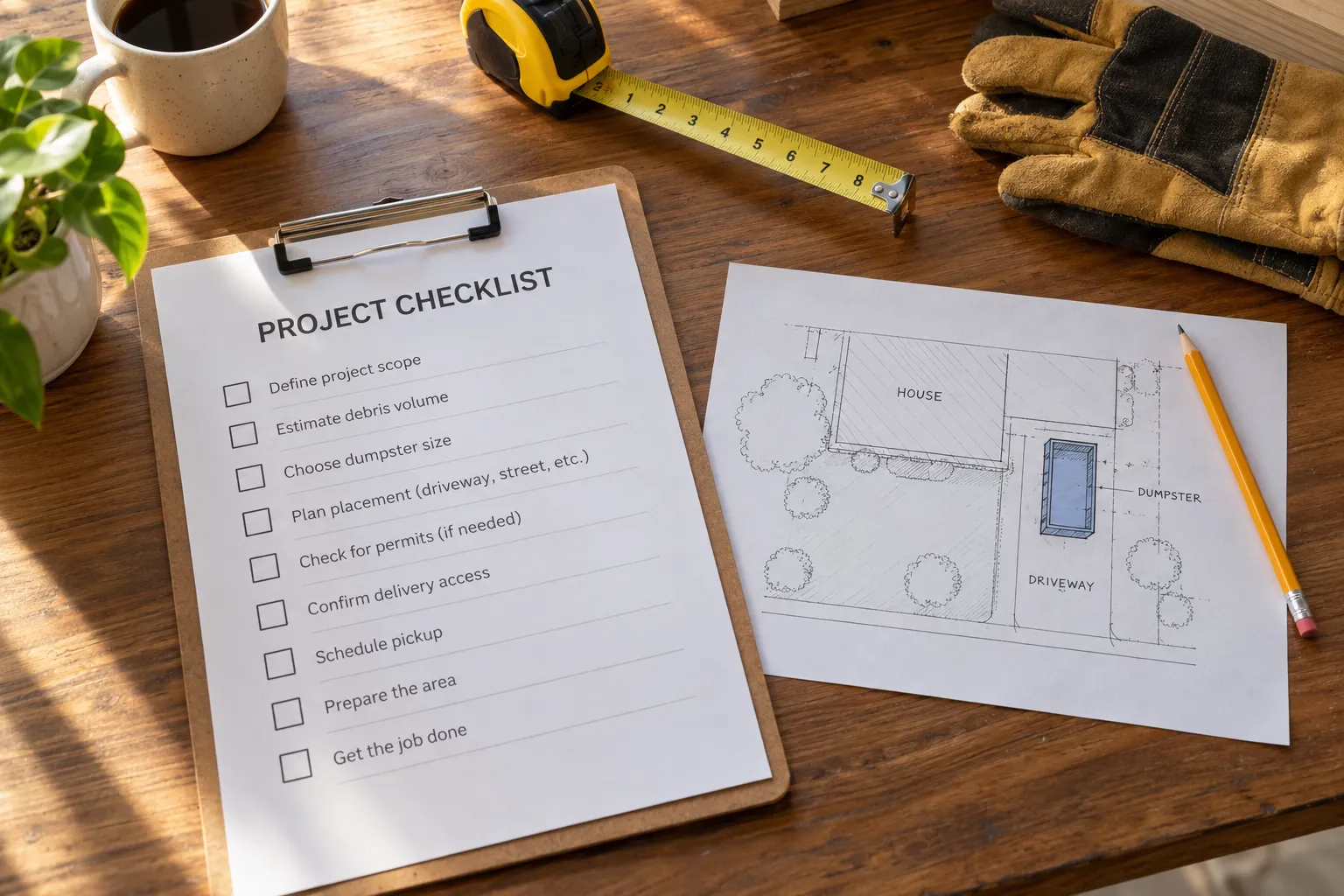
Start with the full delivery path
Walk from the street to the proposed spot. Look for parked vehicles, tight turns, gate posts, low branches, wires, roof overhangs, soft shoulders, and steep grades. Photograph anything that could be difficult to describe by phone. The driver needs more room than the final container footprint because the container travels along the truck during placement.
Measure the resting area
Measure usable width and length, not the full driveway on a property plan. Subtract space needed to open a garage, pass on foot, reach another vehicle, or use a container door. Ask for the actual dimensions of the available container instead of planning around a generic size label.
Think about the surface
Concrete condition, asphalt temperature, pavers, gravel, slope, drainage, and underground structures can affect placement. Protective boards may reduce concentrated contact, but they do not guarantee that every surface can accept a loaded container. Tell the operator about cracks, recent paving, septic areas, or other concerns.
Keep pickup in the plan
A perfect delivery spot can become a bad pickup spot if a vehicle, material pile, or contractor trailer blocks it later. Mark the area for household members and trades. Keep debris below the allowed fill line and do not hang long pieces over the sides.
Working checklist
- Full address and best approach
- Measured placement width and length
- Overhead wires, branches, and roof edges checked
- Surface and slope described
- Property or HOA approval confirmed if needed
- Delivery and pickup area kept clear
Need an address-specific answer?
Use the companion Residential page, then call with the site and debris details.
Call (678) 697-8928